
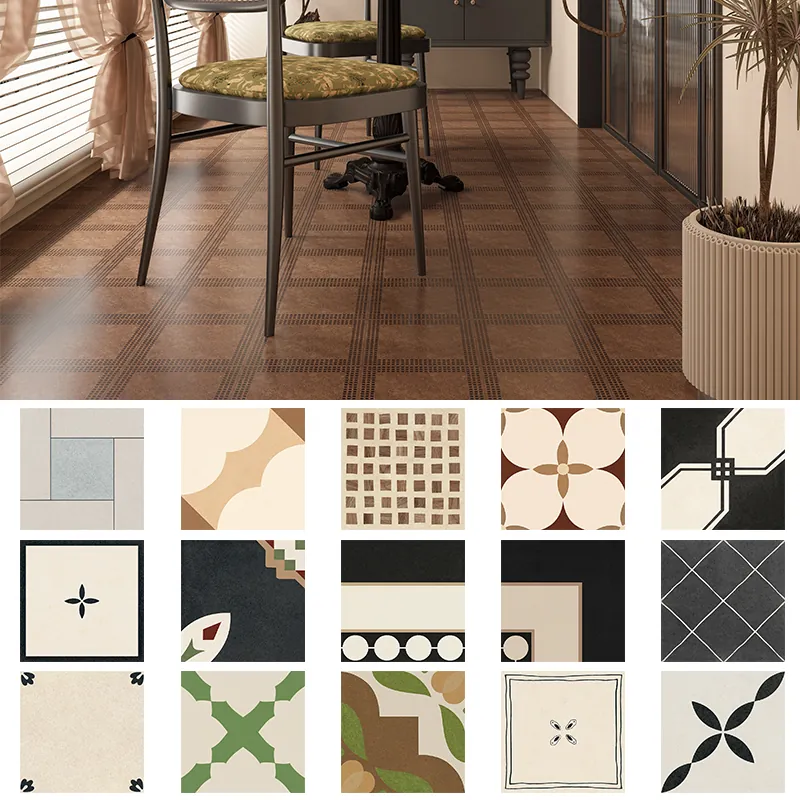
Combining patterns can make an interior feel layered and personal, but it can also create visual competition when every surface demands attention. A patterned floor, decorative backsplash, printed wallpaper, and heavily textured furniture may each look attractive on their own. Together, however, they need a shared design direction.
When working with patterned ceramic tile, we recommend thinking about the relationship between patterns rather than choosing each finish separately. Differences in scale, color, repetition, and placement can help create contrast while keeping the room visually comfortable.
Give Each Pattern a Different Role
The easiest way to mix patterns is to establish a clear visual hierarchy. Choose one dominant pattern, then use secondary patterns to support it.
For example, a decorative ceramic floor can become the main feature of a kitchen or entrance. Nearby walls and cabinetry can use simpler finishes, allowing the floor design to remain visible. If the backsplash is also patterned, consider choosing a smaller-scale motif or a design with fewer contrasting colors.
This does not mean every other surface must be plain. It means the patterns should not compete at the same visual intensity. A room usually feels more organized when one surface attracts attention first and the others provide supporting detail.
Balance Large and Small Pattern Scales
Pattern scale affects how much visual space a design occupies. Large geometric shapes or bold floral motifs are noticeable from a distance, while small repeating details often create a more subtle texture.
Combining different scales can prevent a room from looking repetitive. A large floor motif, for instance, may work alongside a smaller pattern on a backsplash. The contrast gives each surface its own identity without making the designs appear unrelated.
However, avoid placing several intricate patterns close together without a visual break. If the floor and wall both have dense designs, use a simpler transition such as a plain-colored border, neutral wall section, or understated furniture finish.
Before finalizing the selection, arrange samples next to one another. A pattern that appears delicate on one tile may become much stronger when repeated across an entire wall or floor.
Build a Shared Color Palette
Different patterns do not need identical designs, but they benefit from a consistent color relationship.
Start with two or three colors that appear in the room’s main finishes. One can serve as the dominant background, while another appears in the decorative tile and a third is repeated in accessories or furniture. This creates continuity even when the motifs differ.
For example, a geometric floor with muted blue and beige details could be paired with a smaller decorative wall pattern that repeats the same blue. The shapes do not need to match because the shared colors connect the surfaces.
Pay attention to undertones as well. Warm beige, cool grey, and bright white can look noticeably different beside one another. Review samples under the room’s actual lighting, since daylight and artificial lighting may change how colors are perceived.
Use Plain Surfaces to Create Visual Breathing Room
A successful pattern combination needs areas where the eye can rest. Plain surfaces provide that space and make decorative details easier to appreciate.
In a bathroom, patterned floor tiles might be paired with simple wall tiles and a restrained shower finish. In a kitchen, a decorative backsplash can become the focal point while cabinet fronts and countertops remain relatively understated. In a living area, a patterned floor can be balanced by neutral walls and furniture with uncomplicated silhouettes.
The amount of plain surface depends on the size of the room and the intensity of the patterns. Strong colors and dense motifs generally need more visual space around them. Softer patterns may allow greater variation elsewhere.
Consider Pattern Direction, Layout, and Transitions
Pattern mixing is not only about color and motif. Installation layout also changes the final effect.
Check whether the pattern has a clear direction, a repeating sequence, or a central motif that needs to be aligned. Consider how the design will meet doorways, adjoining flooring, corners, and fixed furniture. A pattern that looks balanced in a product photograph may require careful planning when it covers an irregular floor area.
For open-plan interiors, transitions deserve particular attention. If two adjoining areas use different decorative tiles, consider a clear boundary or a shared color that visually connects them. Avoid introducing a new pattern at every change of function; repeating selected design elements often creates a more cohesive result.
Explore Decorative Options with JLA Ceramics
At JLA Ceramics, our Pattern Tiles collection includes geometric, floral, vintage, and contemporary designs in ceramic and porcelain options. The range covers decorative applications for kitchens, bathrooms, living spaces, and commercial interiors, including patterned floors, backsplashes, and feature walls. We also support customization according to project requirements, with options involving patterns, colors, sizes, and finishes.
As a ceramic tile manufacturer based in Foshan, China, we operate dedicated floor-tile and wall-tile factories and provide custom design and OEM services. Our quality-control process includes checks for flatness, color consistency, and durability, while our team supports overseas customers with global shipping and technical assistance.
If you are developing an interior scheme with multiple decorative surfaces, share your reference images, floor plan, preferred colors, and intended applications with us. Contact JLA Ceramics to explore suitable patterned tile options and discuss the specifications for your project. A considered combination begins with the right designs—and a clear plan for how they work together.

