
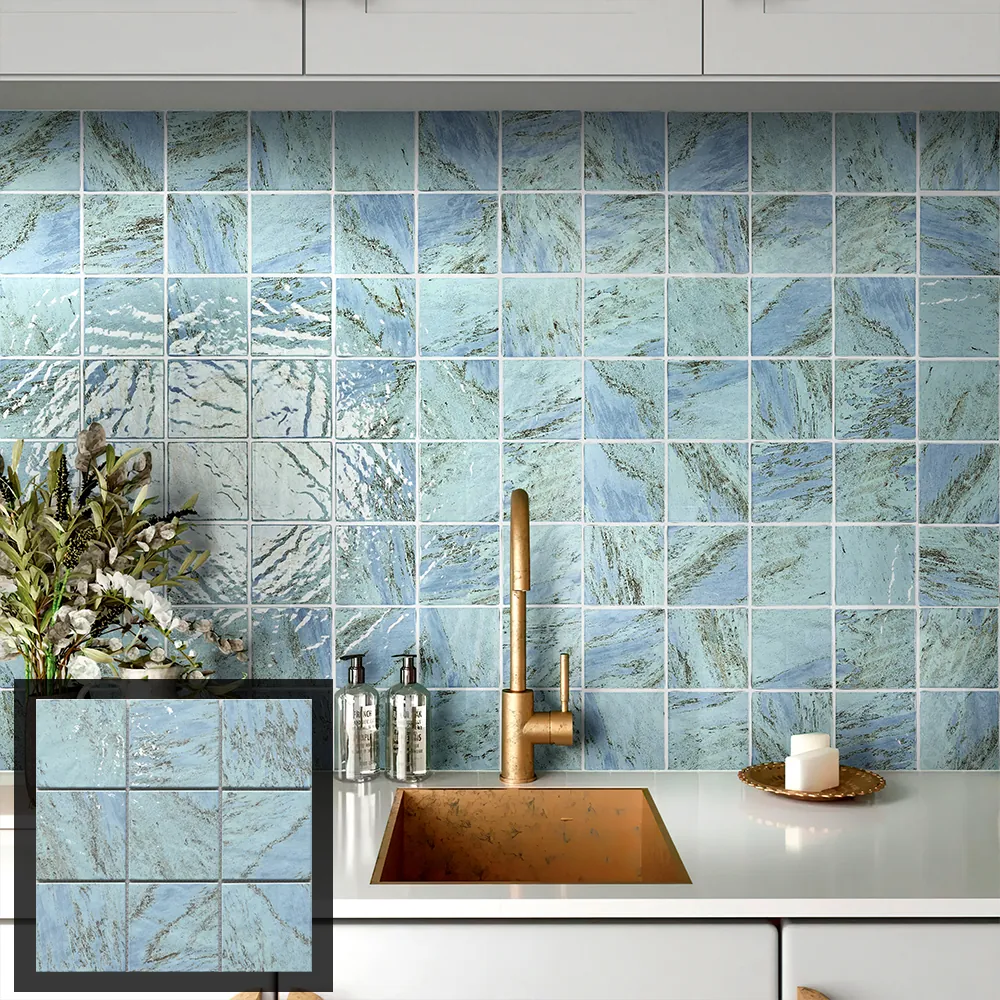
Mosaic tiles can turn a small surface into a defining part of an interior, but the same design does not automatically suit every room. A kitchen backsplash faces cooking residue and frequent wiping; a shower wall is exposed to regular moisture and cleaning; a feature area may be judged mainly by its color, pattern, and relationship with nearby finishes. Choosing a mosaic therefore means balancing appearance with the conditions of the space.
When we help buyers evaluate a mosaic tiles backsplash project, we recommend starting with the intended location, then narrowing the choice by material, finish, format, and maintenance requirements. This makes product comparisons more useful than selecting from photographs alone.
Start with the Conditions of Each Application
Kitchen Backsplashes: Consider Cleaning and Visual Balance
A kitchen backsplash is exposed to grease, splashes, and frequent wiping. Buyers should therefore consider how easily the selected finish can be cleaned; actual maintenance depends on the surface, grout, and cleaning products.
Small mosaics can add color or pattern without overwhelming the kitchen. A subtle tonal design may complement cabinets and countertops, while a geometric pattern can create a focal point behind a cooktop or sink. Compare a physical sample with nearby finishes and the room’s lighting rather than relying on screen colors.
Shower Areas: Verify Wet-Area Suitability
Shower walls and shower floors have different performance requirements. A product suitable for a vertical wet-area application should not automatically be specified for flooring.
For shower floors, request relevant technical information, including slip-resistance data where applicable, surface characteristics, and installation recommendations. Smaller mosaic pieces create more grout joints, but this alone does not guarantee slip resistance. The tile surface, grout, floor slope, drainage, substrate, and workmanship all affect the finished installation.
Confirm the exact product’s intended use with the supplier and installer, and account for local building requirements and the complete waterproofing system.
Feature Areas: Let Pattern and Scale Guide the Choice
Feature walls, niches, and vanity areas offer more room for visual expression. Consider the wall’s scale and how the mosaic pattern relates to nearby materials.
A small repeating pattern can add texture across a broad surface, while a high-contrast design may work better as an accent. Review several sheets together to assess pattern repetition, color distribution, and transitions that a close-up image may not show.
Choose the Material, Finish, and Format Together
Choose material according to the application, not appearance alone. JLA Ceramics’ mosaic range includes ceramic, porcelain, glass, and mixed-material designs. Each offers a different visual effect, while suitability depends on the exact product and installation location.
Ceramic mosaics provide decorative options for interior walls and backsplashes. Porcelain mosaics may suit applications where their technical properties meet project requirements. Glass can add reflective qualities and vivid color, while mixed-material designs combine textures. Request product-specific information rather than assuming every item in a material category performs identically.
Glossy surfaces reflect more light, while matte or textured finishes create a softer effect. In wet areas, a finish name alone does not establish floor suitability or slip performance; check the exact model’s technical data.
Also review piece and sheet dimensions, joint spacing, and pattern repeat. These affect cutting and alignment around corners, niches, and outlets.
What Should Buyers Confirm Before Ordering?
A clear product specification helps designers, installers, and purchasing teams work from the same information. Before confirming a mosaic tiles backsplash order, prepare a checklist that covers:
- Location and use:kitchen wall, shower wall, shower floor, or decorative feature area.
- Product details:material, finish, color, shape, individual piece size, and sheet dimensions.
- Technical suitability:intended application, relevant performance data, and recommended installation materials.
- Visual approval:physical samples reviewed under the project’s lighting and alongside adjacent finishes.
- Quantity planning:measured coverage, cutting allowance, layout complexity, and any spare material needed for future repairs.
- Order coordination:packaging, batch identification, delivery arrangements, and the timing required by the project.
For projects with several rooms or repeated installations, keep the approved sample and product details as a reference. This makes it easier to check deliveries and coordinate replacement requirements later.
Explore Mosaic Options with JLA Ceramics
At JLA Ceramics, we offer mosaic designs for kitchens, bathrooms, showers, swimming pools, and decorative feature walls. Our collection includes ceramic, porcelain, glass, and mixed-material options in different colors, finishes, and patterns. We also support custom mosaic development according to project requirements, including choices involving colors, patterns, sizes, materials, and finishes.
As a Foshan-based ceramic tile manufacturer, we operate dedicated floor-tile and wall-tile factories and serve overseas customers through custom design and OEM services, quality checks, global shipping, and technical support. We encourage buyers to share the intended application, drawings or reference images, preferred material, estimated quantity, and destination when making an inquiry.
Contact JLA Ceramics to discuss the mosaic options that fit your project. By confirming the application and product specifications at the beginning, your team can make a more informed selection and move from design approval to ordering with fewer uncertainties.

