
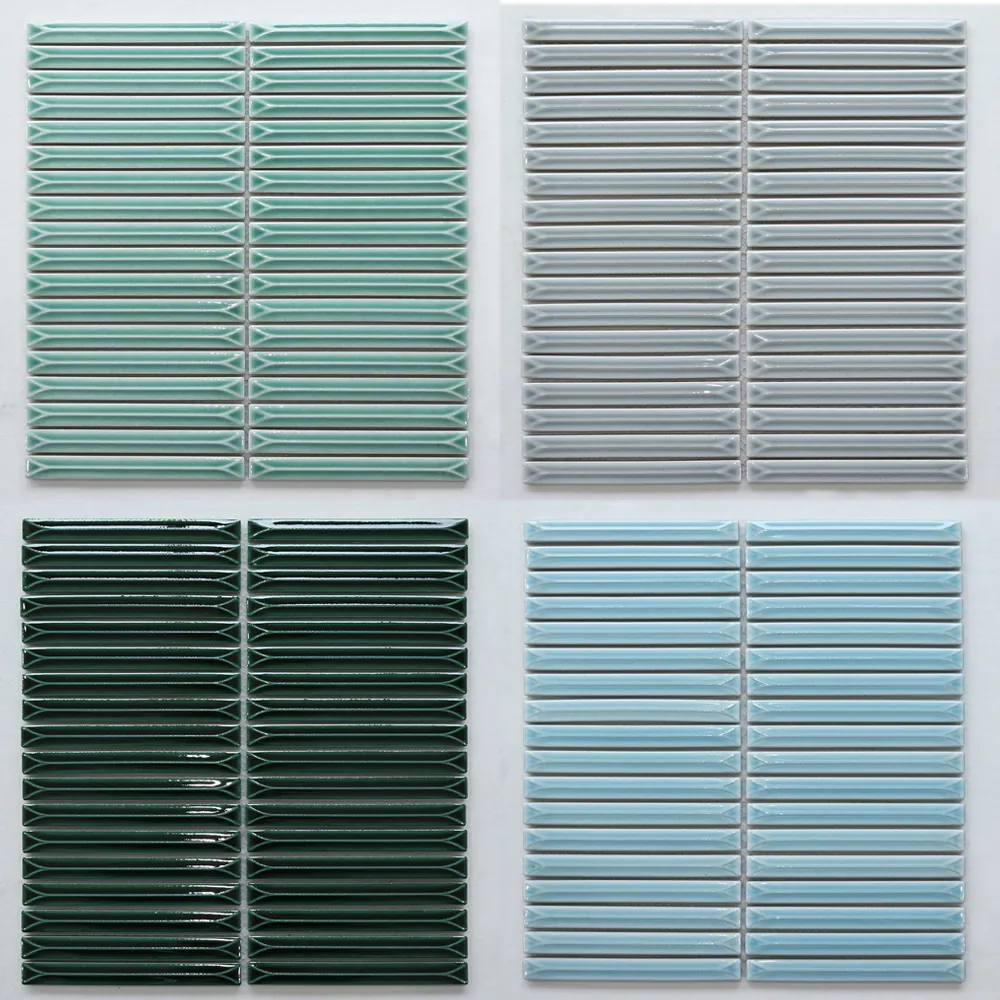
A mosaic tile sample can look attractive on its own and still create problems when several sheets are installed together. A slight difference in color, an unexpected surface sheen, or inconsistent spacing between individual pieces may become much more noticeable across a large backsplash, shower wall, or swimming pool. For distributors and project buyers, sample approval should therefore go beyond deciding whether a design looks appealing.
When sourcing mosaic tile wholesale products, buyers need to evaluate how the tiles look as individual pieces, how they are arranged on each sheet, and how multiple sheets connect after installation. A clear approval process helps reduce misunderstandings before bulk production and gives suppliers a more precise reference for fulfilling the order.
Review Color Tone Across Multiple Samples
Color should be assessed under realistic lighting rather than judged from a single photograph. Natural daylight, warm indoor lighting, and cool commercial lighting can all influence how a mosaic surface appears. A color that looks neutral in a showroom may appear warmer or cooler in another environment.
For a reliable assessment, request enough sample material to compare several pieces together. Look for differences in the base color, decorative accents, and the distribution of lighter or darker elements. If the design intentionally includes tonal variation, decide whether the variation should be subtle, balanced, or pronounced.
For larger projects, record the approved color reference and keep a physical sample. Photographs are useful for documentation, but they cannot fully reproduce the appearance of glaze, glass, or textured surfaces. If the order will involve multiple production batches, ask how color consistency will be checked and whether batch identification can be provided.
Check the Finish and Surface Characteristics
The finish changes both the appearance and the practical suitability of mosaic tiles. Glossy surfaces reflect more light and can emphasize color depth, while matte finishes create a softer visual effect. Textured surfaces introduce additional visual interest, but their cleaning requirements may differ from those of smoother products.
The material also matters. Ceramic, porcelain, glass, and mixed-material mosaics do not necessarily have the same surface characteristics or technical performance. Buyers should avoid treating all finishes as interchangeable, particularly when products are intended for wet areas or floors.
During sample approval, examine:
- Sheen:Does the surface reflect more or less light than expected?
- Texture:Is the surface smooth, raised, patterned, or irregular?
- Color distribution:Does the finish create the intended visual effect across several pieces?
- Edges:Are the individual pieces cleanly finished, without obvious damage?
- Application suitability:Are the material and finish appropriate for the intended wall, floor, shower, or pool installation?
Ask the supplier for relevant technical information, including slip resistance or water-related performance where the application requires it. Appearance alone cannot establish whether a mosaic is suitable for a particular installation.
Inspect Sheet Alignment and Joint Spacing
Mosaic tiles are commonly supplied in sheets or assembled units to make installation more manageable. However, the arrangement on one sheet must connect properly with the next. If the spacing or alignment is inconsistent, the sheet boundaries may become visible as gaps, repeated lines, or interruptions in the pattern.
Place several sample sheets side by side on a flat surface. Check whether the individual pieces follow a consistent grid or pattern and whether the spacing between sheets matches the spacing within each sheet. For designs with geometric shapes, strips, or repeating motifs, pay particular attention to pattern continuity at the edges.
Also check the backing system. Depending on the product, mosaics may use mesh-mounted or other sheet arrangements. Buyers should confirm the mounting method and ask whether the backing and adhesive are suitable for the intended installation environment.
Do not approve sheet alignment based on one isolated sheet. A multi-sheet sample layout provides a more realistic view of how the finished surface will look.
Prepare a Full Sample Layout Before Approval
A small sample is useful for checking material and finish, but a larger mock-up is better for evaluating the overall design. Arrange several sheets in the intended direction and examine the transitions between them. For a project involving borders, contrasting colors, or repeated decorative elements, include those details in the sample layout.
Review the mock-up from different distances. Close inspection helps identify chipped edges, inconsistent joints, and surface defects. Viewing it from the normal standing distance shows whether the overall color distribution and pattern look balanced.
Once the sample is accepted, document the approved material, color, finish, sheet dimensions, piece arrangement, and joint spacing. If possible, keep an approved reference sample available for comparison during production inspection.
Confirm Bulk Order Details Before Production
Sample approval should lead directly to a clear purchasing specification. Buyers should confirm the product reference, material, dimensions, finish, quantity, packaging, and delivery destination. They should also clarify the minimum order quantity, sample charges, production schedule, and shipping terms with the supplier.
For projects requiring future replenishment, retain the original sample and order records. This makes it easier to identify the product and discuss whether a later batch can match the original appearance. If the project uses several mosaic designs, label each approved sample separately to avoid confusion.
Explore Mosaic Tile Options With JLA Ceramics
At JLA Ceramics, our mosaic tile collection includes ceramic, porcelain, glass, and mixed-material designs in different colors, finishes, and patterns. The range covers decorative options for kitchen backsplashes, bathroom walls, shower areas, swimming pools, and feature walls. We also provide custom mosaic solutions based on project requirements, including options involving colors, patterns, sizes, materials, and finishes.
Our wider services include custom design and OEM support, quality checks, and worldwide shipping. Buyers can share their target application, preferred design, estimated quantity, and reference samples with our team so that the appropriate product specifications and customization possibilities can be discussed before ordering.
Approve the Details Before Placing the Order
A successful mosaic order depends on more than a good-looking sample. Color tone, surface finish, sheet alignment, and technical suitability all need to be reviewed together. Approving a multi-sheet layout and keeping a written specification gives both buyer and supplier a clearer standard for bulk production.
Based in Foshan, China, JLA Ceramics specializes in ceramic wall and floor tiles, with two dedicated factories and monthly production capacity of up to 1,000,000 m² for floor tiles and 200,000 m² for wall tiles. We support wholesale and customized tile requirements for residential and commercial projects, alongside quality control and international logistics. Contact our team with your preferred mosaic material, design references, order quantity, and delivery requirements to discuss samples and sourcing options.

